Skip to content

Pre-dental · Biology B.S. · UNC–Chapel Hill

Tae Bark

Where chairside care meets the science beneath it.

I’m a Biology student at UNC–Chapel Hill preparing for dental school, with 500 hours of chairside assisting across general dentistry and oral surgery. I’m curious about the biology beneath the chair, and I’m building explainable machine-learning projects on public cancer data.

Clinical
500 hrs assisting
Minors
Chemistry & Neuroscience
Class
May 2027
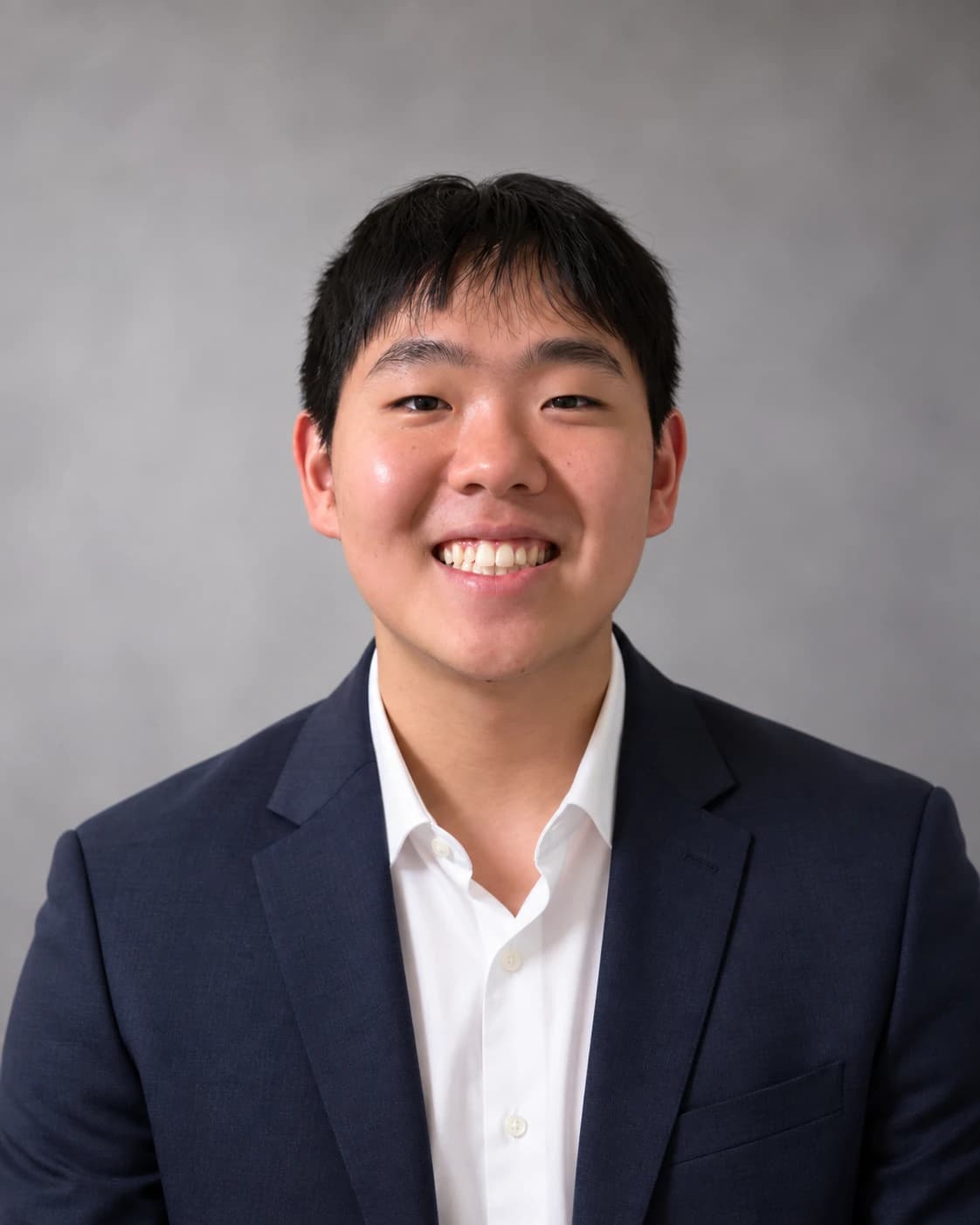
Portrait of Tae Bark in a navy blazer against a grey backdrop.
FIG. 01 — Portrait · Chapel Hill, NCFIG. 00 — Helix Arch · generative motif, not data

§ 01 — About

A student of the chair

I came to dentistry through the chair — and stayed for the biology underneath it.

At a glance

Degree
B.S. Biology · May 2027
Minors
Chemistry · Neuroscience
Clinical focus
Oral & Maxillofacial Surgery
Certifications
CPR · BLS · Dental Radiology · OSHA · HIPAA
Language
Korean (fluent)

I study Biology at UNC–Chapel Hill, with minors in Chemistry and Neuroscience. Most of what I know about dentistry I learned by assisting — in a general practice and in an oral surgery center — where precision, sterility and a calm word to a nervous patient all matter at once. Outside the clinic I teach as a Biology Learning Assistant, lead a weekly youth group, and volunteer with dental and community programs.

Alongside that, I build small, reproducible machine-learning projects on public cancer data: two are finished, and one on oral squamous cell carcinoma is in progress. I try to be clear about what each one can and can't say.

Interests

  1. 01

    Oral & Maxillofacial Surgery

    Assisted in extractions and implant placement under IV sedation; 100 hours shadowing OMS.

  2. 02

    General dentistry

    The everyday foundation of the field: prevention, restorative care and the long patient relationships I saw in a general practice.

  3. 03

    Biomedical Research

    Computational projects in Python: an oral-microbiome study of periodontitis, comparative genomics of oral streptococci, a transcriptomic study of oral squamous cell carcinoma, explainable cancer classifiers and an epidemic-modelling platform.

Clinical assisting
500hrs
Shadowing, 5 specialties
314hrs
Biology Learning Assistant
4sem.
Chairside careExplainable MLOral & Maxillofacial SurgeryServiceUNC–Chapel HillPre-dental

§ 02 — Projects

Selected cases

Select a tooth to explore a project.

Independent student projects. Finished work links to its GitHub repository and shows real figures from it, and three of them run live in the browser. Educational only — not clinical tools.

Case 03

  • Independent
  • Finished

Transcriptomic Profiling of Oral Squamous Cell Carcinoma

A reproducible reanalysis of paired tumor and normal RNA-seq from patients with oral squamous cell carcinoma, checked against an independent cohort and explorable in an interactive Streamlit app.

Status
Independent · Finished
Domain
Bioinformatics · transcriptomics
Data
Discovery: GEO GSE20116 — six RNA-seq samples from three matched patients, using the raw count columns from the original publication's supplementary table (Tuch et al., 2010). …
Methods
  • Paired PyDESeq2 model (~ patient_id + condition), Benjamini–Hochberg correction
  • Hallmark gene-set enrichment (preranked GSEA) and over-representation analysis
  • Frozen candidates re-tested in an independent cohort (GSE184616)
Technologies
  • Python
  • PyDESeq2
  • GSEApy
  • pandas
  • Streamlit
  • Plotly
  • pytest
Up / down in tumor (discovery)
363 / 976
Replicated in an independent cohort
706 of 1,339
Matched tumor–normal pairs
3 + 15

Key findings

  • Discovery (q < 0.05, |log2 fold change| > 1): 363 upregulated and 976 downregulated gene representatives out of 10,541; 35 features were excluded after an optimizer convergence failure.
  • Leading upregulated representatives include PTHLH, LAMC2 and COL4A6; leading downregulated include TMPRSS11B, PTGFR and PYGM.
  • Hallmark GSEA placed E2F Targets toward tumor (NES 2.61) and Myogenesis toward normal tissue (NES −2.57).
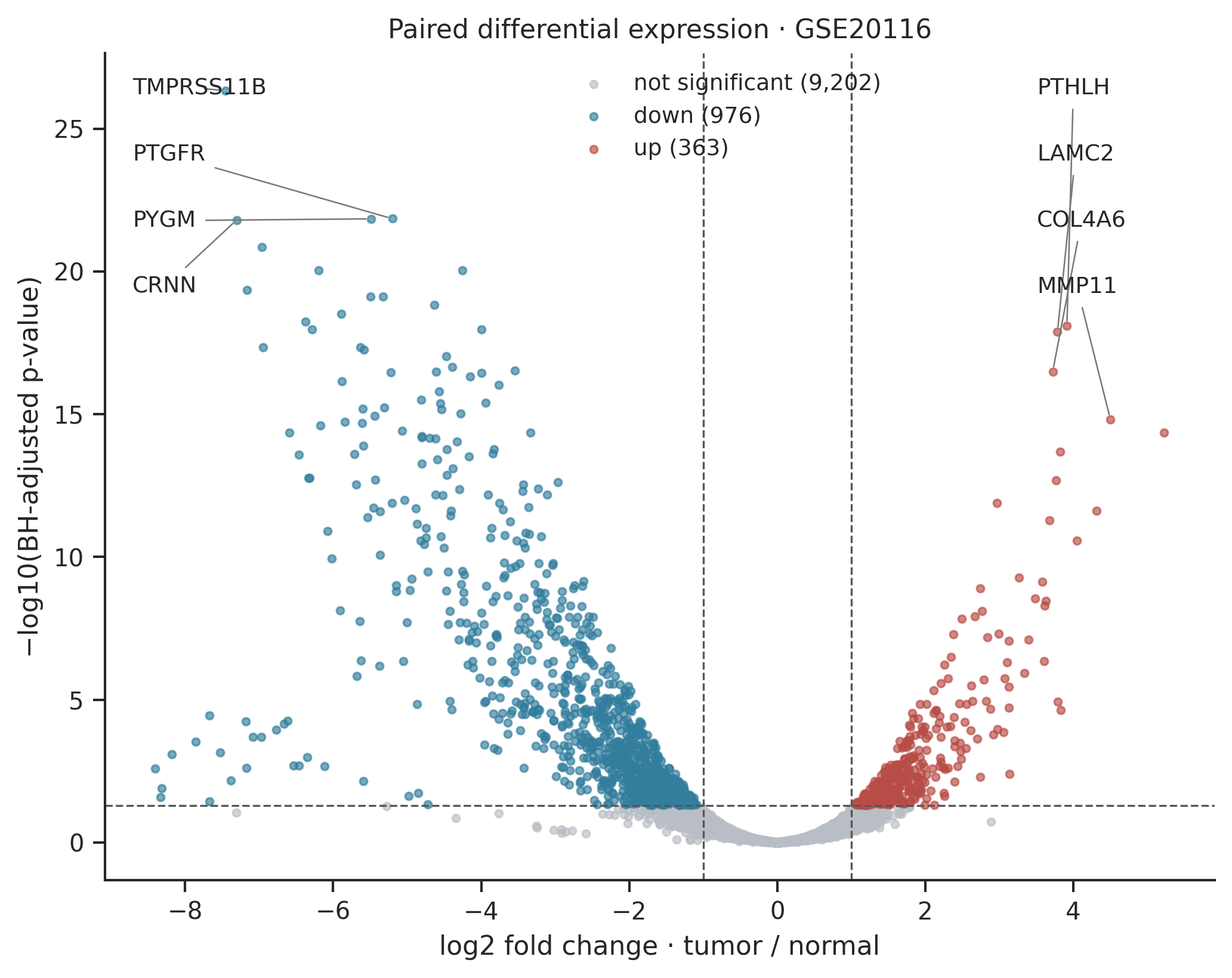
Volcano plot of paired differential expression in GSE20116: 976 downregulated and 363 upregulated gene representatives in tumor versus normal tissue, with PTHLH, LAMC2, COL4A6 and MMP11 labelled among upregulated genes and TMPRSS11B, PTGFR, PYGM and CRNN among downregulated genes.
Fig. 03 — Paired differential expression · GSE20116 · Figure from the project repository

Exploratory research — no clinical claims
Case 05

  • Independent
  • Finished

ORALBIOME: Reproducible 16S rRNA Analysis of the Oral Microbiome in Periodontitis

A reproducible Python pipeline that asks whether the salivary bacterial community differs between periodontally healthy people and people with periodontitis, with pre-registered predictions, negative and positive controls, and a replication cohort.

Status
Independent · Finished
Domain
Microbiome · 16S rRNA analysis
Data
Unstimulated saliva, 16S rRNA V3–V4, Illumina NovaSeq; periodontitis diagnosed with the 2018 AAP/EFP classification. …
Methods
  • Genus-level CLR abundances; alpha and beta diversity with PERMANOVA and PERMDISP (999 permutations)
  • Per-genus Mann-Whitney tests with BH-FDR, plus a pre-declared red-complex species test
  • L1 logistic regression and random forest in repeated CV, with a permuted-label null, an ablation and a replication cohort
Technologies
  • Python
  • NumPy
  • pandas
  • SciPy
  • scikit-learn
  • matplotlib
  • seaborn
  • NetworkX
  • Streamlit
  • Altair
  • pytest
PERMANOVA R², healthy vs periodontitis
0.082 (p = 0.015)
Classifier AUC, without its top taxon
0.92 → 0.64
Classifier AUC, replication cohort
0.52 [0.32, 0.72]

Key findings

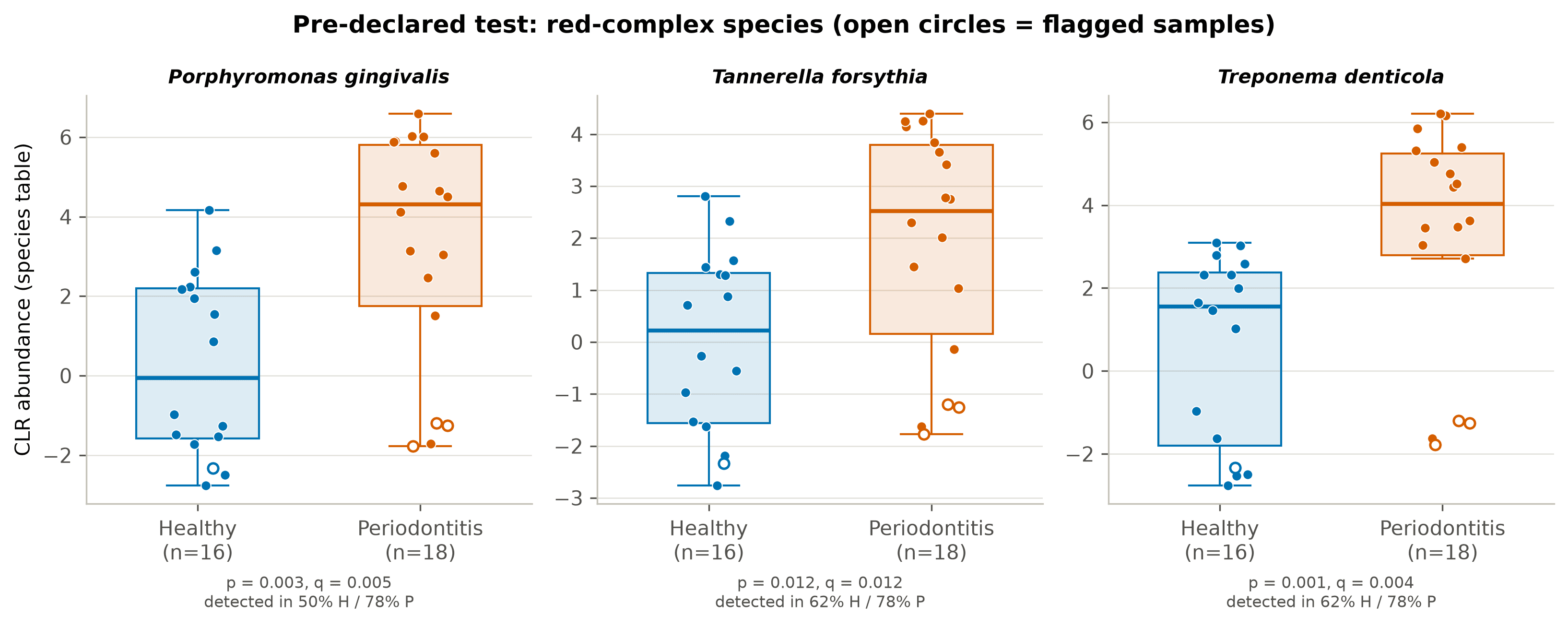
  • All three pre-declared red-complex species are more abundant in periodontitis saliva: P. gingivalis q = 0.005, T. forsythia q = 0.012, T. denticola q = 0.004.
  • An L1 logistic regression separates 16 healthy from 18 periodontitis samples above a permuted-label null (AUC 0.92 [0.81, 1.00], permutation p = 0.0099), but it leans heavily on one unidentified taxon, “Unclassified Bacilli”: removing it drops the AUC to 0.64.
  • Did not replicate: in the hypertensive participants (17 vs 16), PERMANOVA p = 0.402, the classifier AUC is 0.52 [0.32, 0.72] (permutation p = 0.495) and the red-complex species give q = 0.53–0.76.
Box plots of centred log-ratio abundance for Porphyromonas gingivalis, Tannerella forsythia and Treponema denticola in healthy (n = 16) and periodontitis (n = 18) saliva; all three are higher in periodontitis (q = 0.005, 0.012 and 0.004).
Fig. 05 — Pre-declared red-complex species test · Figure from the project repository

Associations only — no clinical claims

Case 07

  • Independent
  • Finished

PANDEMICA: Computational Epidemiology & Outbreak Modelling

A Python platform that models how an infectious disease spreads — deterministic, stochastic, network and spatial models — fitted to real outbreak data, with a live Streamlit dashboard.

Status
Independent · Finished
Domain
Computational epidemiology
Data
The 1978 boarding-school influenza outbreak (England) and early COVID-19 case counts from JHU CSSE (a method demonstration only), plus synthetic datasets with known parameters for validation.
Methods
  • Deterministic (ODE), stochastic (Gillespie), network and spatial models side by side
  • Least-squares fits with bootstrap intervals, plus a Bayesian MCMC fit (emcee)
  • Validation against analytical results and synthetic data with known parameters
Technologies
  • Python
  • SciPy
  • NetworkX
  • emcee
  • Streamlit
  • pytest
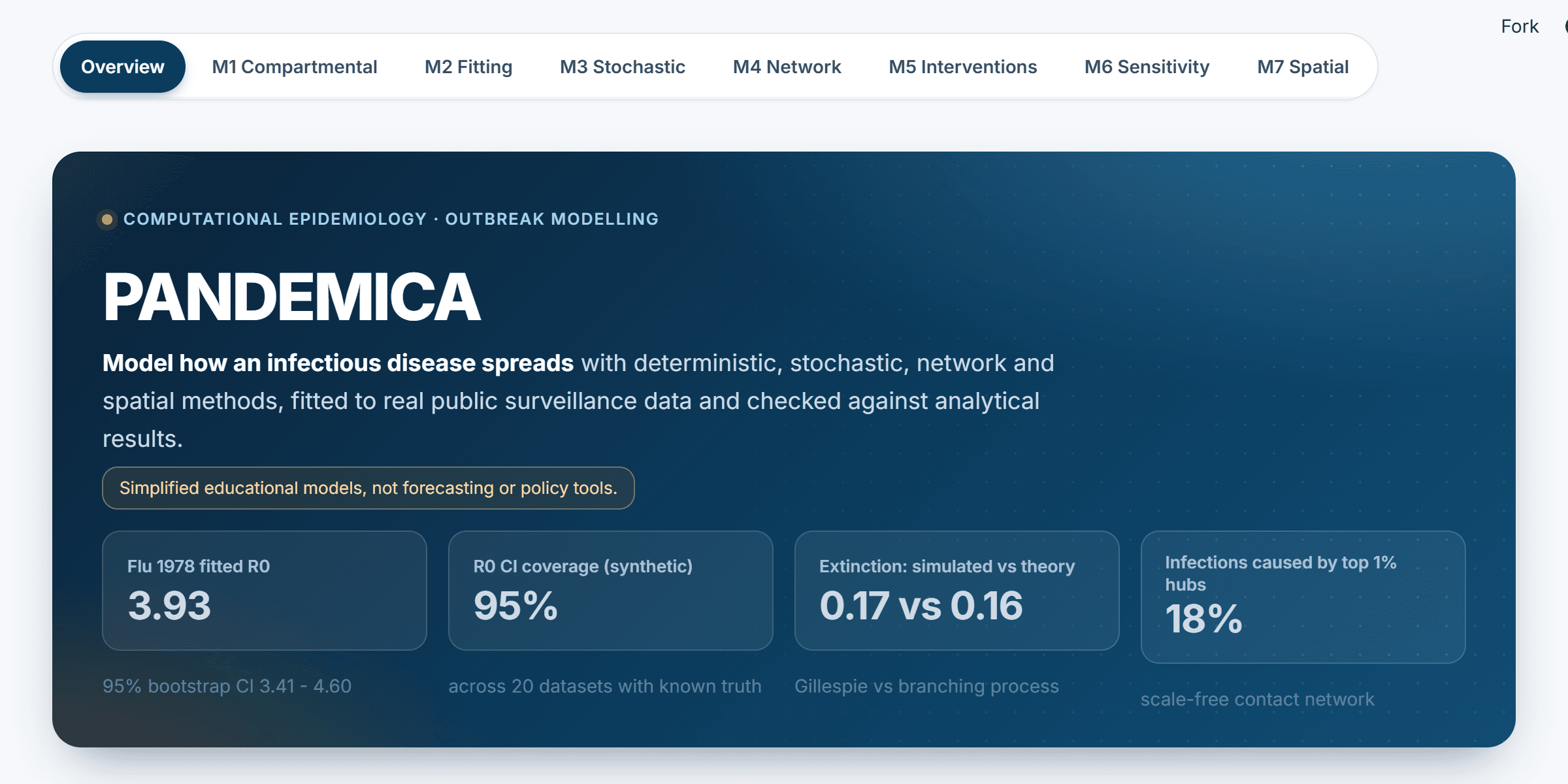
Fitted R0, 1978 flu outbreak
3.93
Extinction: simulated vs theory
0.17 vs 0.16
Attack rate, targeted vs random vaccination
2.8% vs 58.8%

Key findings

  • Real-data fit: 1978 boarding-school influenza outbreak, R0 = 3.93 (95% bootstrap CI 3.41–4.60), infectious period 2.0 days.
  • Parameter recovery: on synthetic data with known truth, the fit recovers beta, gamma and R0 within 2.6%; the 95% CI for R0 contained the true value in 19 of 20 datasets (a small, suggestive check).
  • Stochastic vs theory: simulated early-extinction probability 0.17 vs branching-process theory 0.16.
Screenshot of the PANDEMICA Streamlit dashboard overview: module tabs and headline results including a fitted R0 of 3.93 for the 1978 influenza outbreak.
Fig. 07 — PANDEMICA Streamlit dashboard · Figure from the project repository

Educational only — not a forecasting tool

Case 10

  • Independent
  • Finished

OncoLens: Explainable Tumor Classification Dashboard

A recall-first, explainable tumor classifier with an interactive Streamlit dashboard, built on the public Wisconsin Diagnostic Breast Cancer dataset.

Status
Independent · Finished
Domain
Machine learning · explainability
Data
UCI Wisconsin Diagnostic Breast Cancer dataset, loaded via scikit-learn: 569 samples, 30 features describing cell nuclei from digitized fine-needle aspirate images (212 malignant / 357 benign).
Methods
  • Five models compared by nested cross-validation
  • Recall-first threshold chosen from out-of-fold predictions (0.2)
  • Exact SHAP explanations, global and per patient
Technologies
  • Python
  • scikit-learn
  • XGBoost
  • SHAP
  • Streamlit
  • pytest
  • Docker
Test recall at t = 0.2
0.976 (41/42)
Test ROC AUC
0.996
Nested-CV ROC AUC
0.9949 ± 0.0051

Key findings

  • Logistic regression was chosen (nested-CV ROC AUC 0.9949 ± 0.0051). All five models were close (0.986–0.995); the differences were within fold-to-fold variation.
  • Held-out test set (114 samples, 42 malignant), threshold 0.5: recall 0.929 (39/42), accuracy 0.965, ROC AUC 0.996.
  • At the chosen threshold of 0.2: recall 0.976 (41/42), precision 0.911, specificity 0.944, accuracy 0.956.
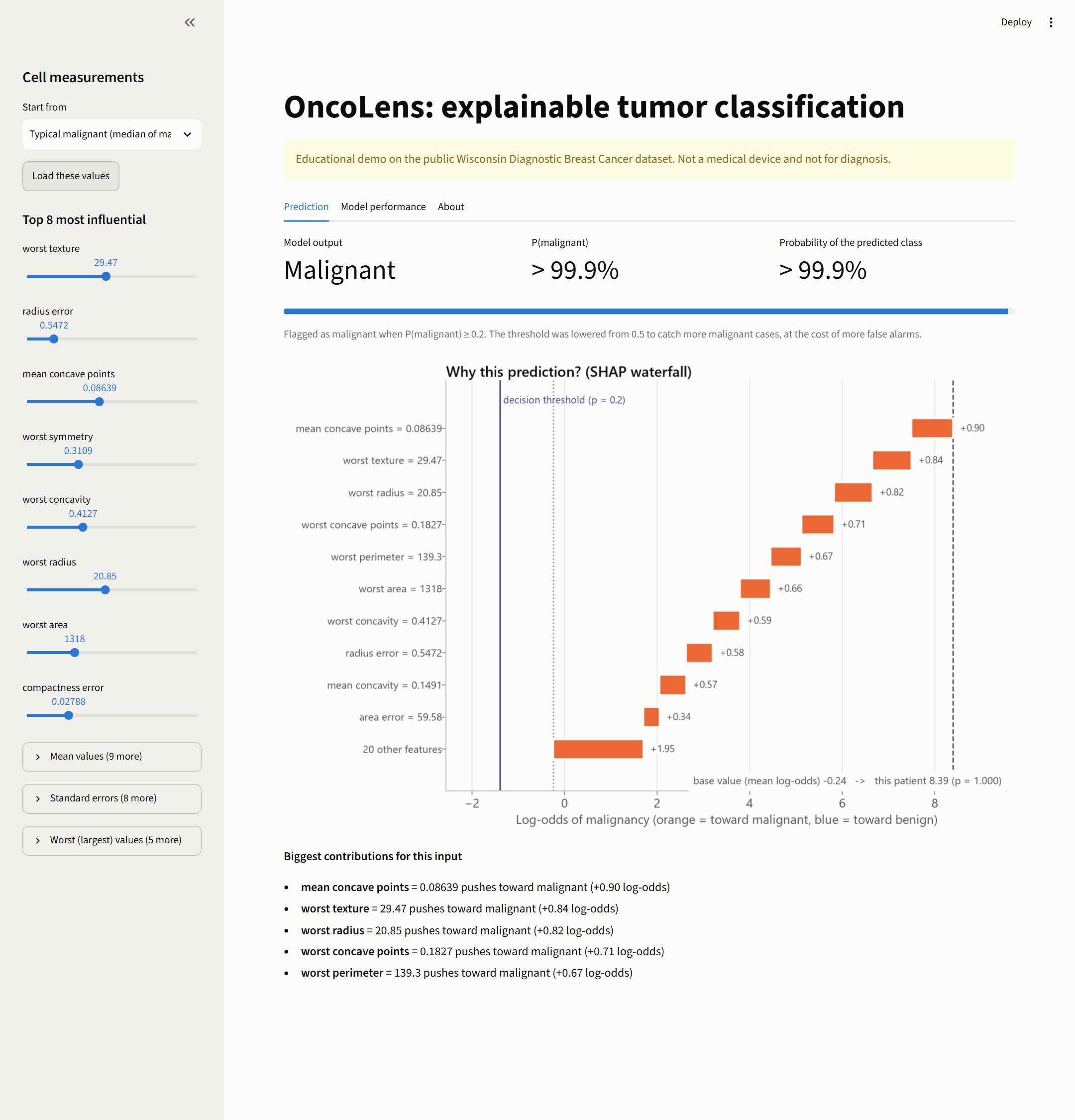
Screenshot of the OncoLens Streamlit app: cell-measurement sliders, a malignant prediction, and a SHAP waterfall chart explaining it.
Fig. 10 — OncoLens Streamlit app · Figure from the project repository

Educational only — not a clinical tool

Case 12

  • Independent
  • Finished

CARIOGENOME: Comparative Genomics of Cariogenic and Commensal Oral Streptococci

A pure-Python comparative-genomics pipeline that compares 6 virulence-associated genes with 8 housekeeping controls across 22 complete genomes from 5 oral streptococcal species, against six pre-registered predictions.

Status
Independent · Finished
Domain
Comparative genomics · molecular evolution
Data
22 complete NCBI RefSeq chromosomes: 10 S. mutans strains and 3 strains each of S. sanguinis, S. gordonii, S. mitis and S. salivarius. …
Methods
  • Reciprocal-best-hit orthologs across 22 complete genomes (pure-Python Smith-Waterman, no external binaries)
  • Nei-Gojobori dN/dS with a 1000-replicate codon bootstrap, sliding windows and per-species replication
  • Six pre-registered predictions tested with Cliff's δ and Benjamini-Hochberg correction
Technologies
  • Python
  • Biopython
  • NumPy
  • SciPy
  • pandas
  • matplotlib
  • py3Dmol
  • Streamlit
  • pytest
Median dN/dS, virulence vs housekeeping
0.156 vs 0.019
Sliding windows with a CI above 1
0 of 579
Amino-acid identity, virulence vs housekeeping
99.06% vs 99.90%

Key findings

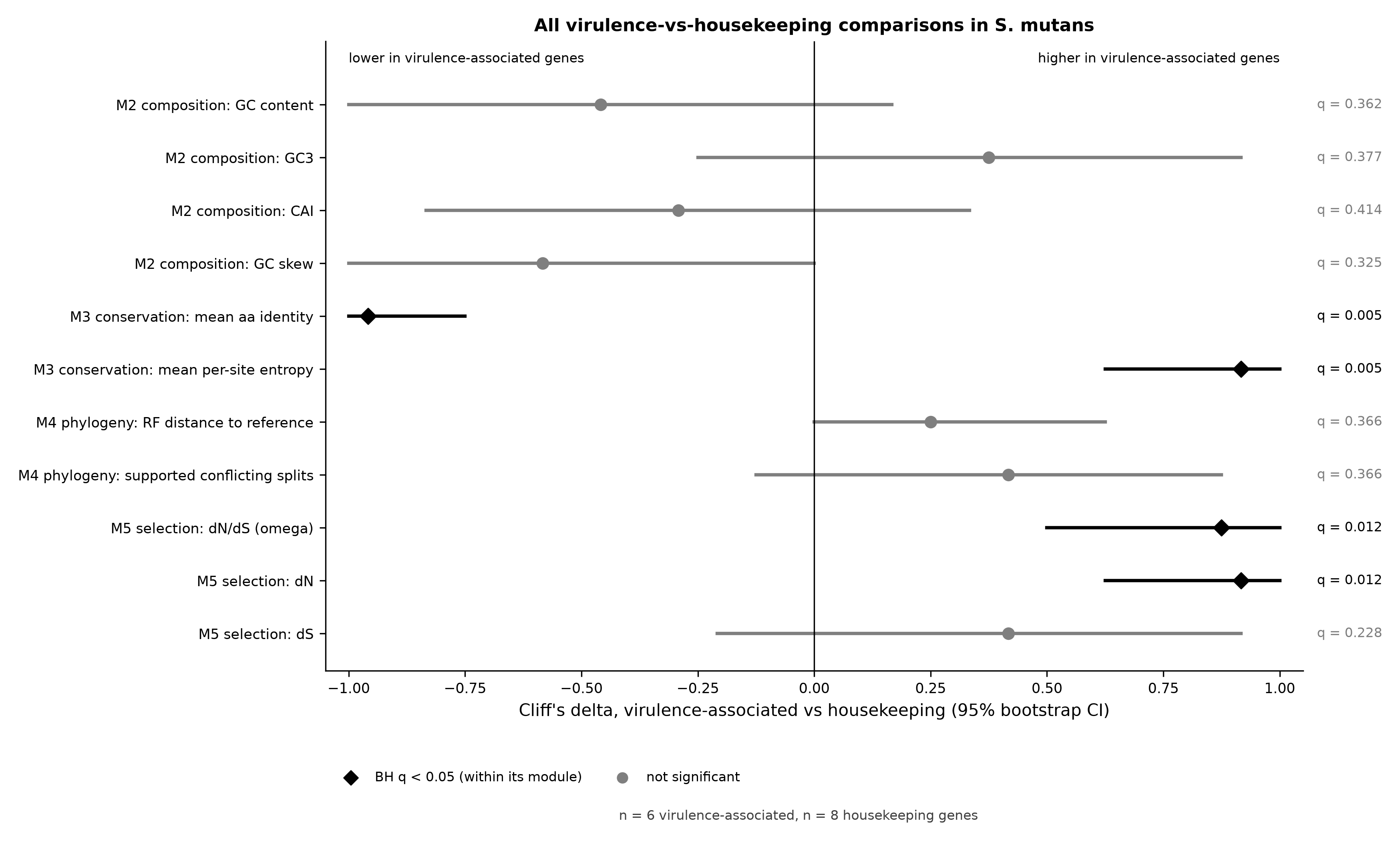
  • Relaxed purifying selection, not positive selection: within S. mutans, median dN/dS is 0.156 for virulence-associated genes vs 0.019 for housekeeping genes (Cliff's δ = 0.88 [0.50, 1.00], BH q = 0.012). The difference comes from dN, not dS; every gene has dN/dS below 1, and none of 579 sliding windows has a CI above 1.
  • The pattern is shared with commensals: homologs in commensal species also have elevated dN/dS (e.g. S. gordonii median 0.138 vs 0.011) — an exploratory analysis added after seeing the data — so it most likely reflects secreted and surface-protein families rather than a cariogenicity-specific signature.
  • Prediction P5 narrowly failed: the GtfC catalytic residues D477, E515 and D588 are invariant across 11 GH70 enzymes, but 20.4% of alignment columns are also invariant, so they rank in the top 10.2% — just outside the pre-registered top 10%. The rule was not changed after the run.
Forest plot of Cliff's delta with 95% confidence intervals for every virulence-versus-housekeeping comparison in S. mutans; only conservation and dN/dS differ significantly.
Fig. 12 — Virulence vs housekeeping effect sizes · S. mutans · Figure from the project repository

Exploratory research — no clinical claims
Case 14

  • Independent
  • Finished

Breast Cancer Tumor Classification with Explainable AI

An end-to-end, reproducible comparison of logistic regression and random forest, with leakage-safe model selection and an untouched holdout.

Status
Independent · Finished
Domain
Machine learning · model evaluation
Data
UCI Wisconsin Diagnostic Breast Cancer dataset, loaded via scikit-learn: 569 samples, 30 features describing cell nuclei from digitized fine-needle aspirate images (212 malignant / 357 benign).
Methods
  • Logistic regression vs random forest on the same 5-fold stratified CV
  • Selection rule prespecified before the holdout was touched
  • SHAP values for every holdout sample, checked for additivity
Technologies
  • Python
  • scikit-learn
  • SHAP
  • Streamlit
  • pytest
  • GitHub Actions
Holdout accuracy
96.49%
Holdout ROC-AUC
0.9960
Malignant recall
92.86%

Key findings

  • Logistic regression was selected.
  • Holdout (114 samples): 96.49% accuracy, 0.9960 ROC-AUC, 92.86% malignant recall.
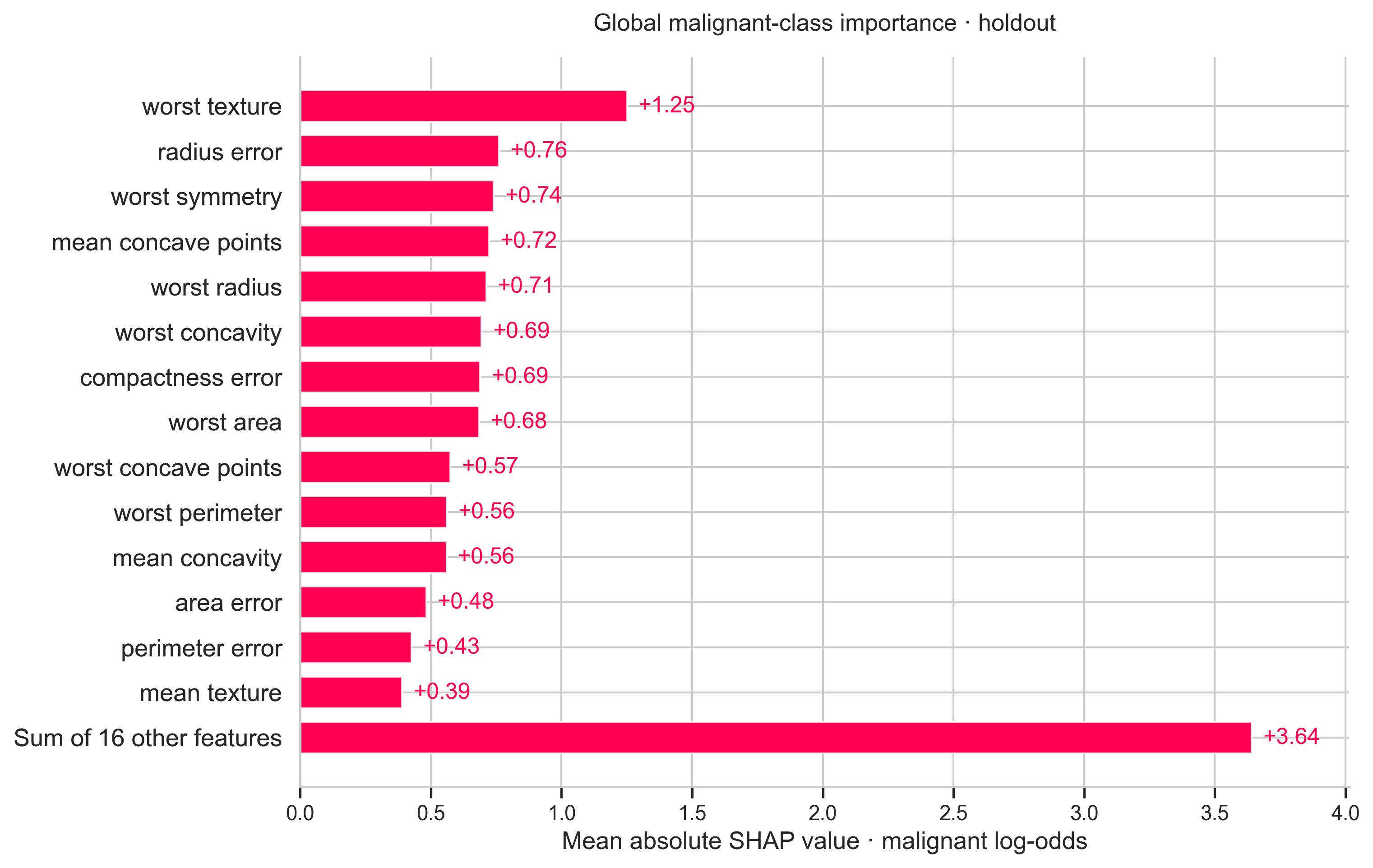
Bar chart of global malignant-class feature importance on the holdout set (mean absolute SHAP value), led by worst texture.
Fig. 14 — Global SHAP feature importance · Figure from the project repository

Educational only — not a clinical tool

§ 03 — Clinical experience

Chairside, and learning from it

  1. May 2026 – Aug 2026 · Waxhaw, NC

    General Dentistry Dental Assistant

    Dogwood Dental Spa

    Specialty
    General dentistry

    What I learned

    A general practice showed me how much of good dentistry happens between procedures — in sterilization, operatory turnover, and how a patient is prepared and informed. I learned to anticipate the next step rather than wait for it.

    Duties (5)
    • Assisted chairside during restorative and preventive procedures
    • Took radiographs and prepared patients for treatment
    • Managed sterilization workflow and operatory turnover
    • Assisted with digital impressions and other digital dentistry workflows
    • Assisted with patient intake and clinical documentation
  2. May 2025 – Aug 2025 · Cary, NC

    Oral & Maxillofacial Surgery Dental Assistant

    Nu Image Surgical and Dental Implant Center

    Specialty
    Oral & maxillofacial surgery

    What I learned

    Surgery under IV sedation taught me how deliberate a sterile field has to be, and how much recovery depends on clear post-operative instructions. It is where my interest in oral and maxillofacial surgery took shape.

    Duties (3)
    • Assisted in extractions, implant placement, and periodontal procedures under IV sedation
    • Maintained a sterile surgical field in adherence with OSHA and infection-control protocols
    • Monitored patients post-operatively and delivered care instructions to support a safe recovery

§ 04 — Service

Care, beyond the clinic

The patients I remember most are the ones who had to wait the longest for care.
Personal statementService keeps me honest about who dentistry is for. These are the places I’ve spent that time.
  1. 04.1

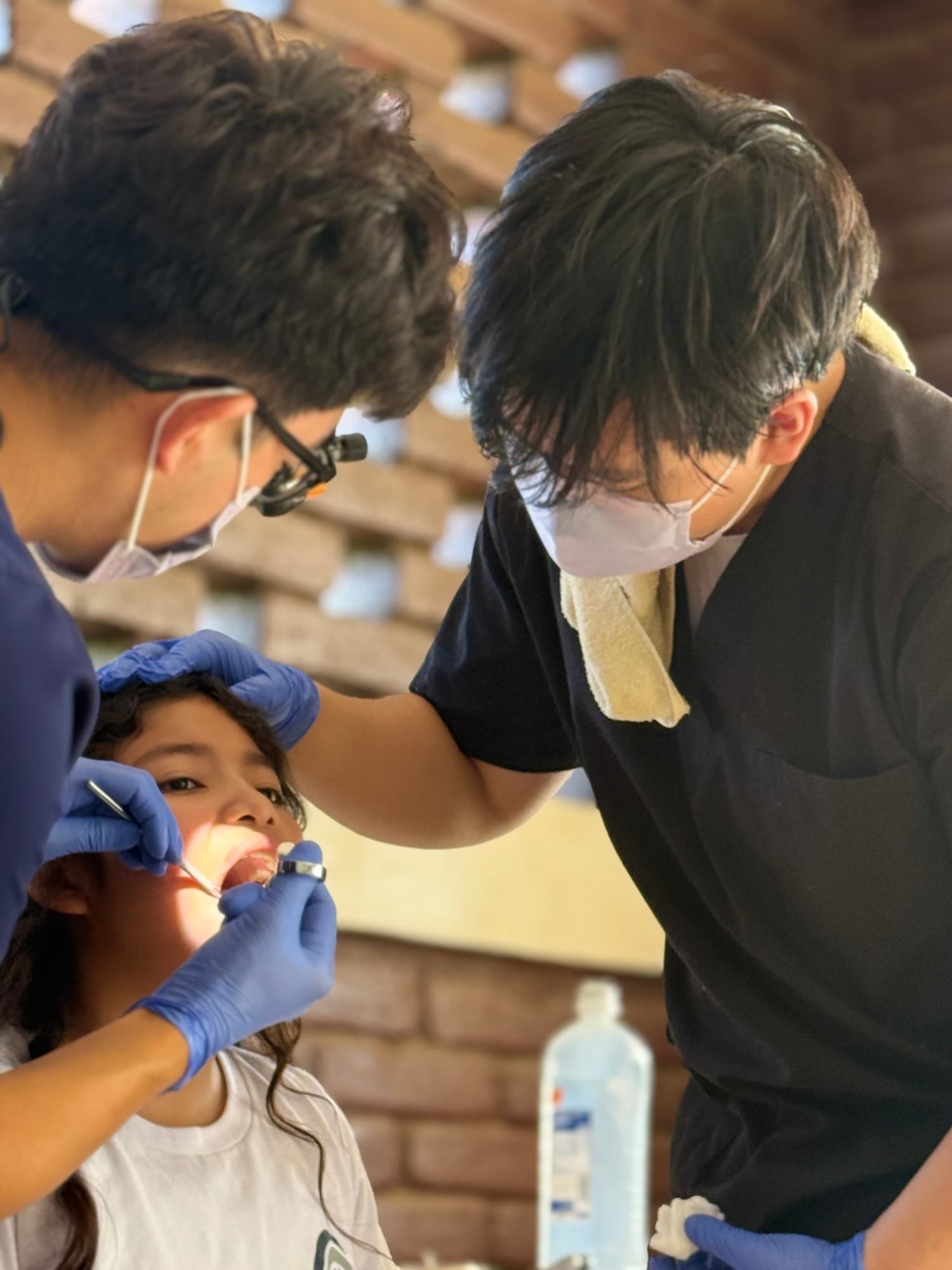
    Volunteers examining a young patient's teeth during the Nicaragua dental mission
    FIG. 04.1 — Nicaragua dental & service mission

    2025, 2026 · Nicaragua

    Nicaragua Mission Trip

    International Dental & Service Volunteer

    • Assisted dental professionals delivering care to underserved populations in resource-limited settings
    • Supported chairside procedures and patient flow
    • Participated in home construction to improve living conditions for local families
  2. 04.2

    Jun 2025 – Present · Durham, NC · 300 hrs

    American Red Cross

    Blood Donor Ambassador

    • Coordinate donor flow during high-volume blood drives
    • Communicate with donors and address their needs
    • Support blood-drive logistics and operations
  3. 04.3

    2025 – Present · Pittsboro, NC · 100 hrs

    Chatham Alliance

    Food Bank Volunteer

    • Distribute food and support low-income community members
    • Helped prepare and serve over 200 meals each week
    • Assist with inventory and logistical operations
  4. 04.4

    Aug 2025 – Present · Raleigh, NC · 25 hrs

    Wake Smiles

    Dental Volunteer

    • Assist dentists with procedures and maintain sterile environments in clinics serving underserved patients

Teaching & leadership

  • Jan 2025 – Present · Chapel Hill, NC · 4 semesters

    Biology Learning Assistant

    University of North Carolina at Chapel Hill

    • Facilitate active-learning sessions that reinforce foundational biological concepts
    • Mentor students in problem-solving, data interpretation, and scientific reasoning
  • Aug 2025 – May 2026 · Chapel Hill, NC

    Treasurer

    Delta Delta Sigma Predental Honor Society

    • Coordinated professional-development events featuring dental professionals and other guest speakers
    • Organized chapter formals and collaborative events with other student organizations
    • Increased available funds by 100% and secured $5,000 in university funding
  • Aug 2024 – Present · Durham, NC · 500 hrs

    Youth Leader

    Hanmaum Church

    • Lead weekly lessons for groups of 8–12 students
    • Develop curriculum and facilitate discussions that promote engagement and mentorship

AlsoBarista, Tous Les Jours — Raleigh, NC · May 2024 – May 2026

§ 05 — Education & skills

Foundations, in progress

Expected May 2027 · Chapel Hill, NC

University of North Carolina at Chapel Hill

Degree
Bachelor of Science in Biology
Minors
Chemistry, Neuroscience

Relevant coursework

Biology

  • Human Anatomy & Physiology (with lab)
  • Cell Biology
  • Molecular Genetics
  • Neurobiology
  • Molecular Control of Metabolism and Metabolic Disease

Chemistry

  • Organic Chemistry I & II (with lab)
  • Biochemistry I & II

FIG. 05.1 — Skills, certifications & more

Clinical
  • Chairside assisting
  • Sterilization & infection control
  • Radiology
  • Instrument setup & breakdown
  • Post-operative care
  • Aseptic technique
Computational
  • R
  • Microsoft Excel
  • Python (developing)
Certifications
  • CPR
  • BLS
  • Dental Radiology
  • OSHA
  • HIPAA
Organizations
  • Beta Beta Beta Biological Honor Society (Tri-Beta)
  • Delta Delta Sigma Predental Honor Society
  • American Red Cross
Language
  • Korean (fluent)
Interests
  • Cello
  • Bass guitar
  • Cooking
  • Skiing

§ 06 — Résumé

The one-page version

Education, clinical experience, service, leadership and skills — on a single page, for admissions committees and busy readers.

§ 07 — Contact

Let’s talk.

Questions about my experience, a project, or an opportunity to shadow or assist — I’d be glad to hear from you.

Based in
Chapel Hill, NC